SOMA: a philosophical sci-fi horror focused on story and puzzles
SOMA, from Frictional Games, is a sci-fi horror puzzle-adventure for Mac players who favor narrative-driven exploration. The game places the player inside the submerged PATHOS-II research station where first-person exploration, stealth evasion, and environmental puzzles advance the plot while probing identity and consciousness. Highlights include terminal-based puzzles, stealth encounters, atmospheric audio, and a Safe Mode that removes lethal enemy deaths. It suits players seeking thoughtful storytelling and deliberate puzzle sessions instead of combat-heavy play.
What kind of game is SOMA?
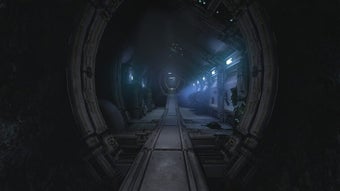
The game casts you as Simon Jarrett, moving through the decaying, submerged corridors of the PATHOS-II research station to piece together why the world collapsed. Design choices downplay inventory management and combat, steering progression toward reading documents, activating terminals, and assembling narrative clues. That emphasis turns player motivation into investigation and ethical reflection rather than resource collection or traditional action goals.
How does stealth and puzzle design shape the experience?
No combat forces a different rhythm: encounters require outsmarting or evading corrupted humans and twisted robotic creatures instead of fighting. Puzzles often interlock with those moments, demanding manipulation of terminals and machinery or discovery of secret documents to open new routes. The interplay of avoidance and problem-solving creates ongoing tension, where distraction, timing, and route choice resolve threats.
What does the game look and sound like?
Sound and level design emphasize atmosphere: tight station geometry and submerged corridors produce a strong sense of isolation, while environmental audio and lighting sharpen each encounter's menace. World-building appears through scattered logs and terminal entries that expand PATHOS-II's backstory. The interface keeps HUD elements minimal and removes inventory lists, keeping the environment as the primary source of information and mood.
How long does it take to finish, and is it replayable?
A focused playthrough typically lasts about 8 to 11 hours, and most replay interest comes from revisiting the narrative and its ending to unpack philosophical implications. That reflective draw, rather than additional modes, drives repeat sessions. On Mac the title requires a 64-bit processor with macOSor later, roughly 4 GB of RAM, and about 25 GB of available storage, which helps set desktop expectations.
An inviting, contemplative pick for reflective players
The game is a clear choice for players who enjoy lingering, morally complex stories and experiences that prompt long afterthoughts. Players who prefer fast action or frequent mechanical variety should temper expectations, since the focus centers on a single, introspective arc. For those willing to sit with difficult questions and slow pacing, the experience rewards patient attention and thoughtful replay.